Where to see the Barasingha
Rucervus duvaucelii · mammal · Cervidae
Barasingha (Rucervus duvaucelii) is recorded in 6 protected areas and wildlife sites across 2 countries in our database. The places with the strongest evidence are Dudhwa National Park (India), Chitwan National Park (Nepal) and Bardiya National Park (Nepal).
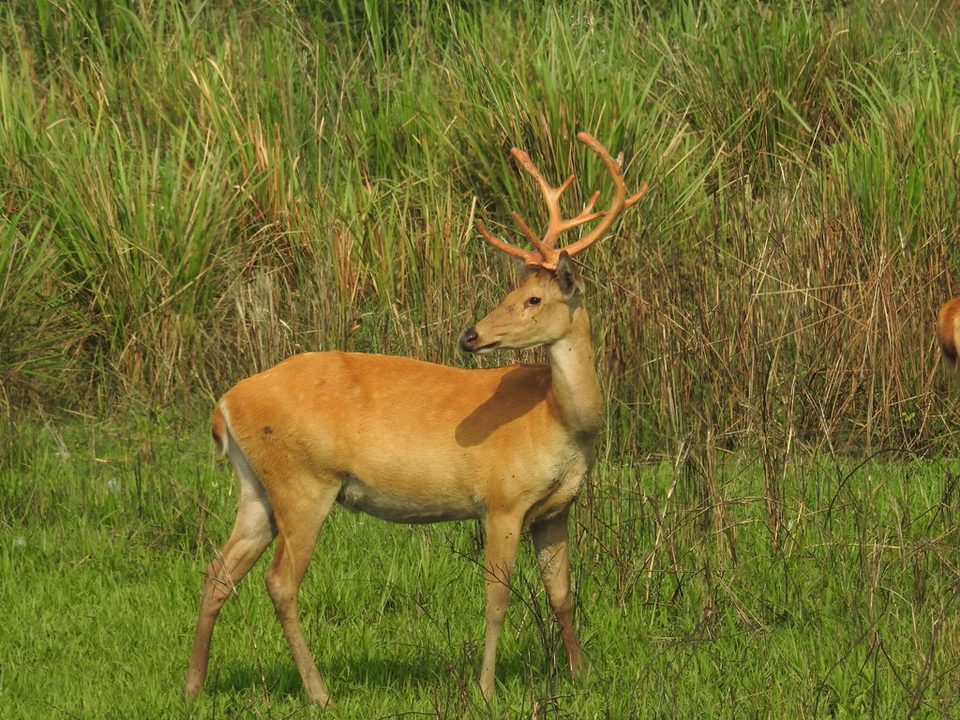
Where is the best place to see the Barasingha?
Based on GBIF records and our guides, the best-documented places to see the Barasingha are Dudhwa National Park (India), Chitwan National Park (Nepal) and Bardiya National Park (Nepal). Most sites are in Nepal (4) and India (2). It appears in 2 trip reports in our library.
Top 6 places for the Barasingha
| # | Place | Country | GBIF records | Years | Evidence |
|---|---|---|---|---|---|
| 1 | Dudhwa National Park | India | – | – | Reported by our guide |
| 2 | Chitwan National Park | Nepal | 12 | – | Recorded on GBIF |
| 3 | Bardiya National Park | Nepal | 11 | 2024 | Recorded on GBIF |
| 4 | Shukla Phanta National Park | Nepal | 11 | 1905 | Recorded on GBIF |
| 5 | Parsa National Park | Nepal | 7 | – | Recorded on GBIF |
| 6 | Kanha National Park | India | 6 | 2008–2011 | Recorded on GBIF |
By country
Nepal: 4 and India: 2.
Seen on trips
The Barasingha is recorded in these trip reports:
- Kanha, Kaziranga and Chitwan Mammal Watching Trip Report, January 2014: Royle Safaris — Royle Safaris
- Assam Mammal Watching Trip Report 2008 — Jon Hall (mammalwatching.com)
Tours that have recorded it
- Kanha, Kaziranga & Chitwan Safari — Royle Safaris
In our guides
Read the full species account in our India guide, Nepal guide.
Take it with you
Build a free printable field guide or e-book for any of these places, with photos and a checklist.
Make a field guide for Dudhwa National ParkPhoto: desertnaturalist, CC-BY.
Data last updated 2026-11-05. Species–place links come from GBIF occurrence downloads (GBIF.org) matched to protected-area boundaries from OpenStreetMap (© OpenStreetMap contributors, ODbL) and other open boundary sources, plus places listed by our own guides. Record counts are what has been reported to GBIF, not population sizes. Reptiles and amphibians are never shown at park level. How this database works · Data sources and limits.