Wildlife of Dudhwa National Park
national park · India
Dudhwa National Park is a national park in India covering about 549 km². Our database links 3 mammals and 302 birds species to it.
What wildlife can you see at Dudhwa National Park?
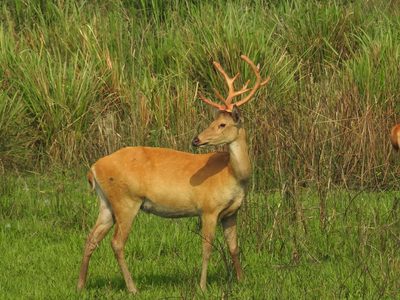
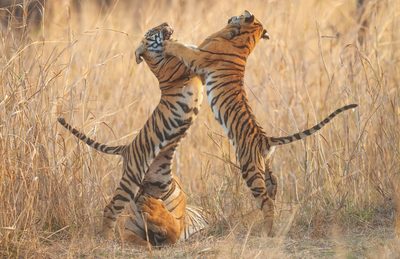
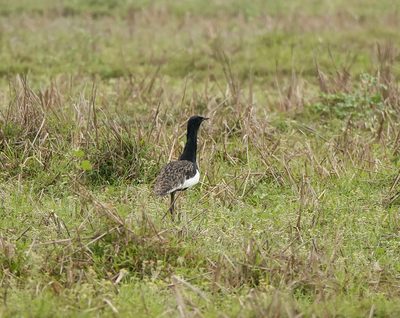
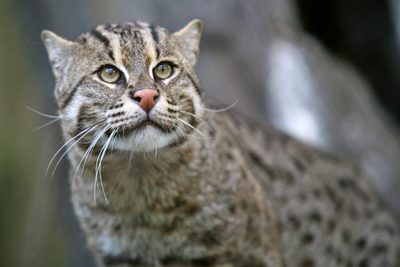
At least 3 mammal and 302 bird species are recorded at Dudhwa National Park (GBIF records and our guides; small mammals and bats are under-recorded). Species visitors look for include Barasingha, Tiger, Bengal Florican and Fishing Cat.
Species to look for
Mammals most often recorded
- Barasingha · listed by our guide
- Tiger · listed by our guide
- Fishing Cat · listed by our guide
Birds most often recorded
- Alexandrine Parakeet 386 rec.
- Rose-ringed Parakeet 382 rec.
- Red-vented Bulbul 310 rec.
- Red-wattled Lapwing 306 rec.
- Rufous Treepie 299 rec.
- White-throated Kingfisher 292 rec.
- Red Junglefowl 280 rec.
- Black-hooded Oriole 279 rec.
- Spotted Dove 274 rec.
- Little Cormorant 265 rec.
- Indian Pond-Heron 260 rec.
- Asian Tit 246 rec.
- Indian Peafowl 239 rec.
- Greater Racket-tailed Drongo 232 rec.
- Eurasian Collared-Dove 223 rec.
- Crested Serpent-Eagle 223 rec.
- Greater Coucal 218 rec.
- Red-whiskered Bulbul 215 rec.
- Black Francolin 214 rec.
- Ashy Prinia 213 rec.
- Gray-headed Fish-Eagle 197 rec.
- Siberian Stonechat 197 rec.
- Bronze-winged Jacana 195 rec.
- Yellow-bellied Prinia 193 rec.
- Large-billed Crow 193 rec.
- Asian Woolly-necked Stork 192 rec.
- Indian White-eye 186 rec.
- Common Hawk-Cuckoo 181 rec.
- Oriental Darter 173 rec.
- Purple Sunbird 169 rec.
272 more birds on the full list.
Nearby wildlife sites
- Dudhwa Tiger Reserve 5 km · 383 species
- Kishanpur Wildlife Sanctuary 33 km · 295 species
- Shukla Phanta National Park 63 km · 432 species
- Black Buck Conservation Area 67 km · 146 species
- Pilibhit Tiger Reserve 67 km · 292 species
- Bardiya National Park 75 km · 477 species
In our guides
Visiting tips, access and seasons: Dudhwa National Park in our India guide.
3 species are listed for this place by our own guides.
GBIF download for India: doi:10.15468/dl.wgy7hx.
Data last updated 2026-11-05. Species–place links come from GBIF occurrence downloads (GBIF.org) matched to protected-area boundaries from OpenStreetMap (© OpenStreetMap contributors, ODbL) and other open boundary sources, plus places listed by our own guides. Record counts are what has been reported to GBIF, not population sizes. Reptiles and amphibians are never shown at park level. How this database works · Data sources and limits.