Wildlife of Jim Corbett National Park
national park · India
Jim Corbett National Park is a national park in India covering about 646 km². Our database links 7 mammals and 471 birds species to it.
What wildlife can you see at Jim Corbett National Park?
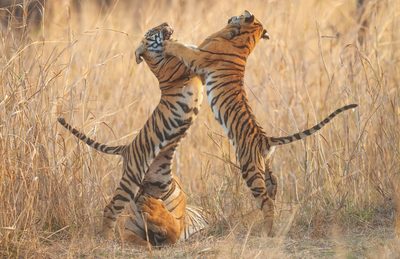
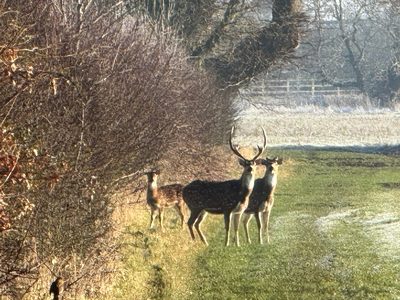
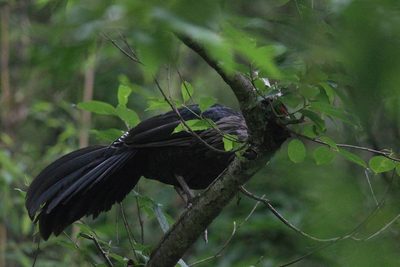
At least 7 mammal and 471 bird species are recorded at Jim Corbett National Park (GBIF records and our guides; small mammals and bats are under-recorded). Species visitors look for include Tiger, Chital and Kalij Pheasant.
Species to look for
Mammals most often recorded
- Chital 19 rec.
- Rhesus Macaque 11 rec.
- Golden Jackal 7 rec.
- Tiger 7 rec.
- Nepal Sacred Langur 5 rec.
- Southern Red Muntjac 5 rec.
- Eurasian Wild Pig 3 rec.
Birds most often recorded
- Red-vented Bulbul 3,848 rec.
- Himalayan Bulbul 3,157 rec.
- Red Junglefowl 3,081 rec.
- Jungle Babbler 2,914 rec.
- Plum-headed Parakeet 2,788 rec.
- Indian Peafowl 2,774 rec.
- Common Myna 2,600 rec.
- Red-whiskered Bulbul 2,566 rec.
- Blue Whistling-Thrush 2,443 rec.
- White-throated Kingfisher 2,424 rec.
- Spotted Dove 2,385 rec.
- Long-tailed Shrike 2,336 rec.
- Changeable Hawk-Eagle 2,312 rec.
- River Lapwing 2,220 rec.
- Indian White-eye 2,139 rec.
- Gray Bushchat 2,134 rec.
- Red-wattled Lapwing 2,127 rec.
- Lineated Barbet 2,084 rec.
- Large-billed Crow 2,057 rec.
- Black-hooded Oriole 2,036 rec.
- Siberian Stonechat 1,930 rec.
- Pied Bushchat 1,927 rec.
- Crested Serpent-Eagle 1,918 rec.
- Gray-headed Woodpecker 1,892 rec.
- White-browed Wagtail 1,831 rec.
- Kalij Pheasant 1,830 rec.
- Common Kingfisher 1,787 rec.
- Asian Tit 1,763 rec.
- Pallas's Fish-Eagle 1,648 rec.
- White-crested Laughingthrush 1,644 rec.
441 more birds on the full list.
Nearby wildlife sites
- Corbett Tiger Reserve 13 km · 546 species
- Sonanadi Wildlife Sanctuary 31 km · 303 species
- Binsar Wildlife Sanctuary 41 km · 259 species
In our guides
Visiting tips, access and seasons: Jim Corbett National Park in our India guide.
GBIF download for India: doi:10.15468/dl.wgy7hx.
Data last updated 2026-11-05. Species–place links come from GBIF occurrence downloads (GBIF.org) matched to protected-area boundaries from OpenStreetMap (© OpenStreetMap contributors, ODbL) and other open boundary sources, plus places listed by our own guides. Record counts are what has been reported to GBIF, not population sizes. Reptiles and amphibians are never shown at park level. How this database works · Data sources and limits.