Where to see the Eurasian Wild Pig
Sus scrofa · mammal · Suidae
Eurasian Wild Pig (Sus scrofa) is recorded in 1,826 protected areas and wildlife sites across 49 countries in our database. The places with the strongest evidence are Forests of Brabant National Park (Belgium), Kakadu National Park (Australia) and Kakadu National Park (Australia).
Where is the best place to see the Eurasian Wild Pig?
Based on GBIF records and our guides, the best-documented places to see the Eurasian Wild Pig are Forests of Brabant National Park (Belgium), Kakadu National Park (Australia) and Kakadu National Park (Australia). Most sites are in Australia (442), Germany (424) and France (245). It appears in 20 trip reports in our library.
Top 25 places for the Eurasian Wild Pig
| # | Place | Country | GBIF records | Years | Evidence |
|---|---|---|---|---|---|
| 1 | Forests of Brabant National Park | Belgium | 14,363 | 2018–2026 | Recorded on GBIF |
| 2 | Kakadu National Park | Australia | 5,668 | 1973–2026 | Recorded on GBIF |
| 3 | Kakadu National Park | Australia | 5,668 | 1973–2026 | Recorded on GBIF |
| 4 | Kakadu National Park World Heritage Site | Australia | 5,665 | 1973–2026 | Recorded on GBIF |
| 5 | Écrins National Park | France | 4,542 | 1966–2022 | Recorded on GBIF |
| 6 | Hoge Kempen National Park | Belgium | 4,003 | 2017–2023 | Recorded on GBIF |
| 7 | Doode Bemde | Belgium | 3,657 | 2018–2024 | Recorded on GBIF |
| 8 | Camargue Regional Natural Park | France | 3,300 | 1978–2025 | Recorded on GBIF |
| 9 | Peneda / Gerês | Portugal | 3,142 | 2015–2023 | Recorded on GBIF |
| 10 | Serra do Gerês | Portugal | 3,140 | 2015–2023 | Recorded on GBIF |
| 11 | Peneda-Gerês National Park | Portugal | 3,139 | 2015–2023 | Recorded on GBIF |
| 12 | Zone tampon de la réserve de biosphère de Camargue | France | 3,069 | 1978–2025 | Recorded on GBIF |
| 13 | Calanques National Park | France | 1,695 | 1995–2025 | Recorded on GBIF |
| 14 | Verdon Regional Natural Park | France | 1,509 | 1977–2026 | Recorded on GBIF |
| 15 | Vale do Tua | Portugal | 1,399 | 2006–2022 | Recorded on GBIF |
| 16 | Zona Especial de Proteção do Alto Douro Vinhateiro | Portugal | 1,391 | 2006–2023 | Recorded on GBIF |
| 17 | Fontainebleau et du Gâtinais | France | 1,250 | 1905–2025 | Recorded on GBIF |
| 18 | Parc national des Calanques (aire d'adhésion) | France | 1,149 | 1998–2026 | Recorded on GBIF |
| 19 | Réserve de biosphère des Cévennes (zone centrale) | France | 1,130 | 1979–2020 | Recorded on GBIF |
| 20 | Cévennes National Park | France | 1,130 | 1979–2020 | Recorded on GBIF |
| 21 | Parc national du Mercantour (aire d'adhésion) | France | 1,053 | 1914–2022 | Recorded on GBIF |
| 22 | Réserve naturelle géologique de Haute-Provence | France | 1,049 | 1978–2022 | Recorded on GBIF |
| 23 | Réserve naturelle nationale de Camargue | France | 926 | 1985–2021 | Recorded on GBIF |
| 24 | Luberon-Lure | France | 921 | 1976–2025 | Recorded on GBIF |
| 25 | Capertee National Park | Australia | 906 | 2008–2024 | Recorded on GBIF |
1,801 more places in the interactive map.
By country
Australia: 442, Germany: 424, France: 245, Spain: 140, Sweden: 120, United States of America: 72, Portugal: 68, Italy: 32, Ukraine: 30, India: 24, Poland: 15, Belgium: 14, Brazil: 14, Czechia: 14, Russia: 13, South Korea: 12, Israel: 11, Austria: 11, Estonia: 10, New Zealand: 9, Luxembourg: 8, Indonesia: 7, Cambodia: 6, Japan: 6, Nepal: 6, Argentina: 6, Denmark: 5, Taiwan: 5, Netherlands: 5, Madagascar: 5, Sri Lanka: 4, United Kingdom: 4, Serbia: 4, Montenegro: 4, Croatia: 3, Thailand: 3, China: 2, Laos: 2, Singapore: 2, Mexico: 2, Hungary: 2, Malaysia: 2, Kazakhstan: 2, Turkey: 2, Norway: 2, Lithuania: 2, Albania: 2, Iran: 2 and Mongolia: 1.
Seen on trips
The Eurasian Wild Pig is recorded in these trip reports:
- Japan Winter Birding Trip Report, January to February 2025: Tropical Birding — Tropical Birding
- Sri Lanka Mammal Watching Trip Report, April 2025: Royle Safaris — Royle Safaris
- Nepal Clouded Leopard Expedition Trip Report, November 2023: Royle Safaris — Royle Safaris
- Sumatra and Java Mammal Watching Trip Report, September 2023: Royle Safaris — Royle Safaris
- Sumatra, Java and Komodo Mammal Watching Trip Report, August 2023: Royle Safaris — Royle Safaris
- Singapore Mammal Watching Trip Report 2022 — Jon Hall (mammalwatching.com)
- Nepal Birding Trip Report, April 2019: Wise Birding Holidays — Wise Birding Holidays
- Sumatran Rhino Expedition Trip Report, August 2019: Royle Safaris — Royle Safaris
- South India Mammal Watching Trip Report, April-May 2017: Royle Safaris — Royle Safaris
- Tadoba Tiger Mammal Watching Trip Report, June 2015: Royle Safaris — Royle Safaris
and 10 more.
Tours that have recorded it
- Japan in Winter: Birding on Ice — Tropical Birding
- Sri Lanka Wildlife Exploration Tour — Royle Safaris
- Clouded Leopard Expedition — Royle Safaris
- Best of Sumatra Wildlife Tour — Royle Safaris
- Sumatra & Komodo Wildlife Adventure Tour — Royle Safaris
In our guides
Read the full species account in our Sumatra guide, Sulawesi guide, Singapore guide, Sri Lanka guide.
Take it with you
Build a free printable field guide or e-book for any of these places, with photos and a checklist.
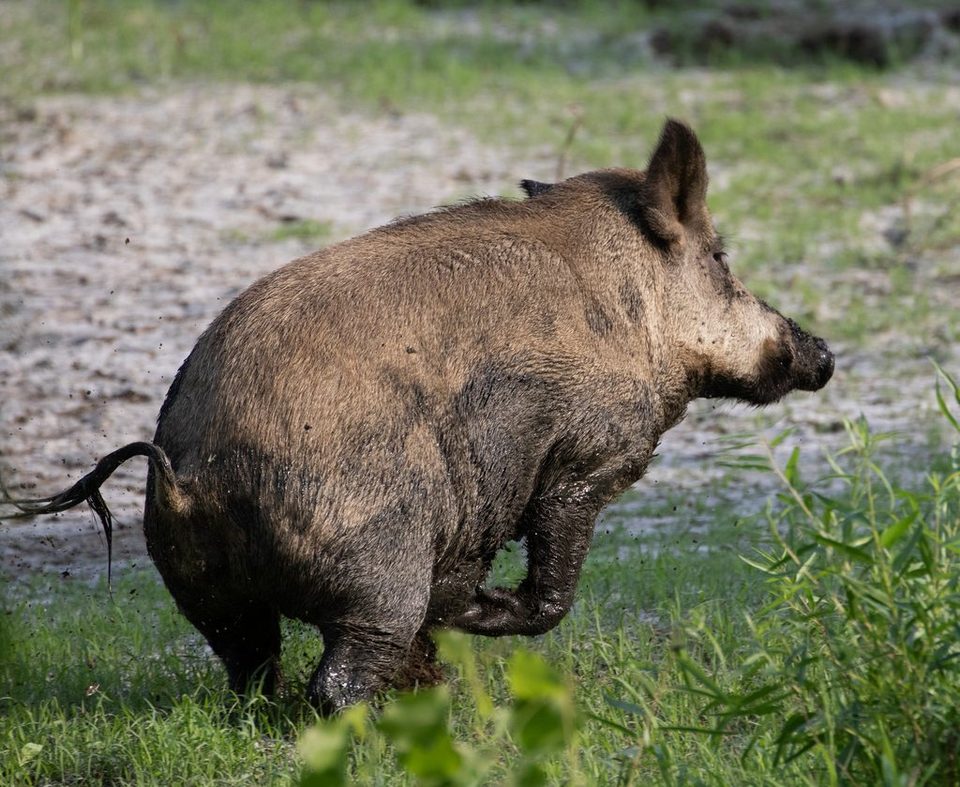
Make a field guide for Forests of Brabant National ParkPhoto: (c) Cullen Hanks, some rights reserved (CC BY), CC-BY.
GBIF downloads: Belgium, Australia, France, Portugal, China, Israel, Ukraine, Germany, Denmark, Cambodia, Brazil, Japan.
Data last updated 2026-11-05. Species–place links come from GBIF occurrence downloads (GBIF.org) matched to protected-area boundaries from OpenStreetMap (© OpenStreetMap contributors, ODbL) and other open boundary sources, plus places listed by our own guides. Record counts are what has been reported to GBIF, not population sizes. Reptiles and amphibians are never shown at park level. How this database works · Data sources and limits.