Wildlife of Superagui National Park
national park · Brazil
Superagui National Park is a national park in Brazil covering about 339 km². Our database links 4 mammals and 225 birds species to it.
What wildlife can you see at Superagui National Park?
At least 4 mammal and 225 bird species are recorded at Superagui National Park (GBIF records and our guides; small mammals and bats are under-recorded). Species visitors look for include Bare-throated Bellbird.
Species to look for
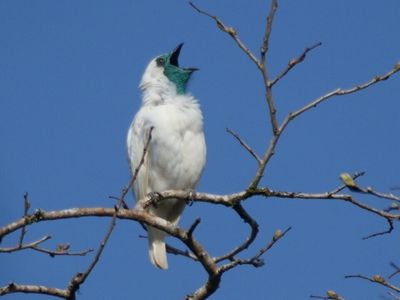
Mammals most often recorded
- Guiana Dolphin 30 rec.
- Franciscana 19 rec.
- Black-faced Lion Tamarin 7 rec.
- Northern Black-eared Opossum 6 rec.
Birds most often recorded
- Black Vulture 107 rec.
- Magnificent Frigatebird 97 rec.
- Kelp Gull 93 rec.
- Red-tailed Amazon 86 rec.
- Great Kiskadee 85 rec.
- Little Blue Heron 75 rec.
- Snowy Egret 75 rec.
- Neotropic Cormorant 73 rec.
- Saffron Finch 72 rec.
- Turkey Vulture 68 rec.
- Southern Lapwing 67 rec.
- Ringed Kingfisher 59 rec.
- Tropical Kingbird 59 rec.
- Brown Booby 58 rec.
- Brazilian Tanager 57 rec.
- Scarlet Ibis 57 rec.
- Gray-breasted Martin 51 rec.
- Ochre-collared Piculet 51 rec.
- Great Egret 47 rec.
- Rufous-collared Sparrow 47 rec.
- Azure Jay 47 rec.
- Long-billed Wren 47 rec.
- Southern House Wren 46 rec.
- Creamy-bellied Thrush 45 rec.
- Tropical Parula 44 rec.
- Blue-and-white Swallow 43 rec.
- Bananaquit 43 rec.
- American Oystercatcher 42 rec.
- Semipalmated Plover 41 rec.
- Shiny Cowbird 41 rec.
195 more birds on the full list.
Nearby wildlife sites
- Salto Morato Private Natural Heritage Reserve 21 km · 216 species
- Ilha do Cardoso State Park 24 km · 387 species
- Guaraqueçaba Ecological Station 24 km · 123 species
- Ilha do Mel State Park 29 km · 197 species
- Área de Proteção Ambiental Guaraqueçaba 31 km · 536 species
- Lagamar de Cananéia State Park 36 km · 255 species
GBIF download for Brazil: doi:10.15468/dl.2u5zep.
Data last updated 2026-11-05. Species–place links come from GBIF occurrence downloads (GBIF.org) matched to protected-area boundaries from OpenStreetMap (© OpenStreetMap contributors, ODbL) and other open boundary sources, plus places listed by our own guides. Record counts are what has been reported to GBIF, not population sizes. Reptiles and amphibians are never shown at park level. How this database works · Data sources and limits.